
Guide
Bookkeeping for Restaurants: Managing Tips, Inventory, and Daily Sales
Updated August 25, 2026

Key Takeaways
- Reconcile POS sales, cash, cards, delivery platforms, discounts, refunds, and sales tax every day.
- Record tips correctly across employee earnings, payroll liabilities, employer obligations, and required IRS reporting.
- Track food and beverage inventory with consistent counts, receiving procedures, and FIFO or weighted-average costing.
- Use weekly and monthly restaurant reports to monitor food costs, labor, prime costs, cash flow, and thin profit margins.
A busy restaurant can generate thousands of dollars in sales while losing profitability through small, repeated bookkeeping errors. A missed void, a miscounted cash drawer, or a tip that never made it into payroll can quietly eat into already-thin margins. With net profit margins often sitting between 3% and 9%, there's little room for sloppy records [6].
Restaurant bookkeeping is harder than typical small-business accounting. You're juggling high transaction volume, perishable inventory, tip reporting, payroll, sales tax, and payments split across processors and delivery apps [3][2].
This article covers three areas: daily sales tracking, tip accounting, and inventory control. We'll also show how Tidy Ledgers Bookkeeping helps owners get clean books and clear reports without adding more work to their plate.
Why Restaurant Bookkeeping Requires Daily Attention
Restaurant books can't wait until month-end. Cash moves fast, food spoils, and small errors pile up quickly. Daily tracking turns raw numbers into decisions you can act on, not just records you file away.
The financial pressure behind every restaurant sale
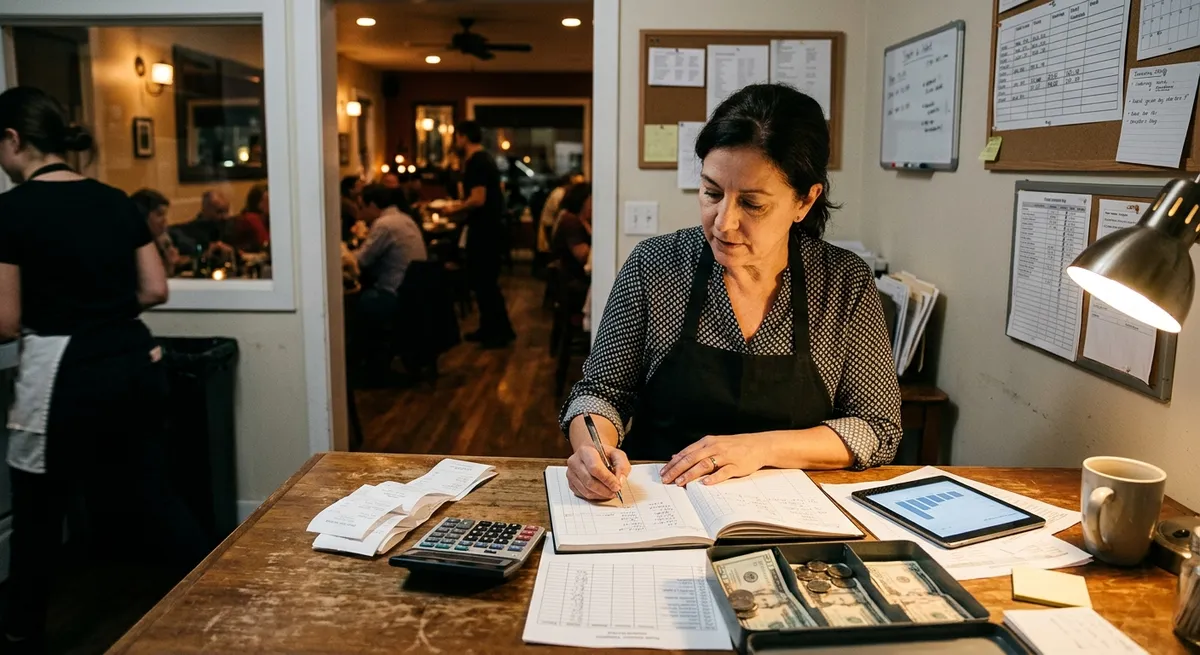
Restaurants often run on thin margins. Industry estimates put net profit margins somewhere between 3% and 9% of sales overall, though the range varies by concept: full-service restaurants tend to run closer to 3-5%, while fast-casual and quick-service restaurants more often land in the 6-9% band[6]. That leaves little room for mistakes.
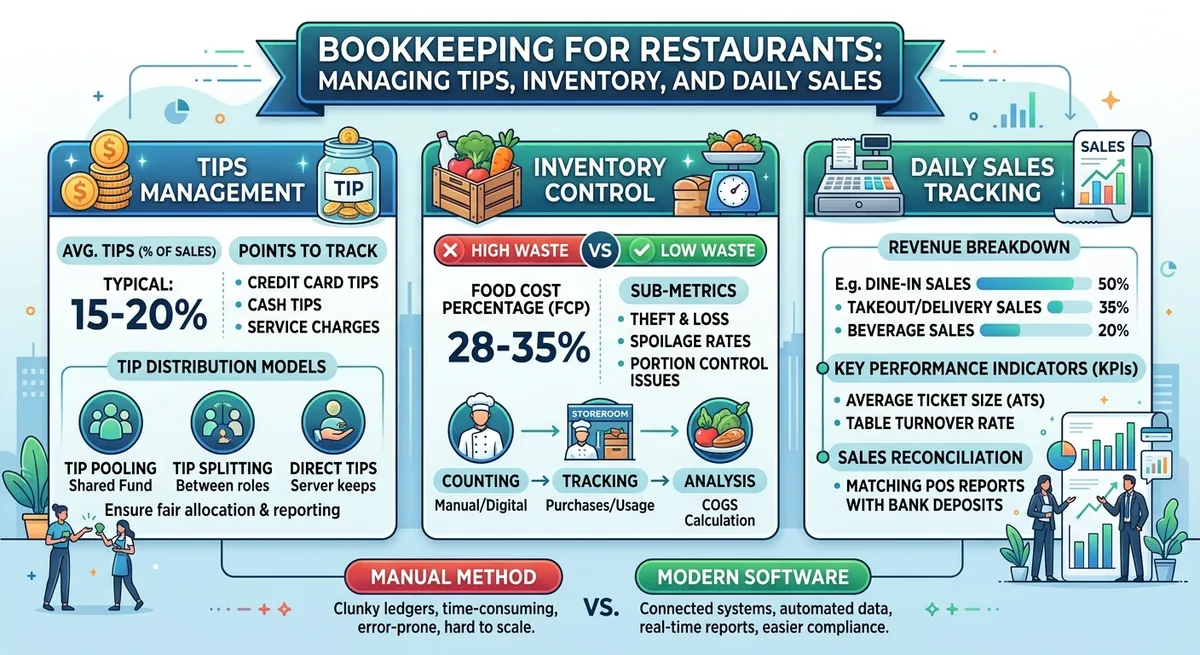
Food costs typically run 28-35% of revenue, and labor often lands near 30-35% at many full-service locations[11]. A small waste problem or a scheduling slip can eat your entire profit for the week. That's why owners need numbers they can trust, not just numbers they have.
These figures are planning benchmarks, not fixed rules. A fine-dining concept, a food truck, and a pizza shop will each land in different spots. Use them as a starting point, then adjust based on your own menu and market.
The core records a restaurant should maintain
Good bookkeeping starts with consistent records. At a minimum, most restaurants should keep:
- POS closeout reports and daily sales summaries
- Deposit slips and card processor statements
- Purchase invoices from food and beverage vendors
- Inventory counts, ideally weekly[7]
- Payroll reports and tip records
- Restaurant sales tax filing records and vendor balances
- Monthly bank and credit card statements
Using the same account categories every month makes comparisons much easier[8]. When your chart of accounts stays consistent, you can spot a cost spike the moment it happens instead of guessing later.
It also helps to separate sales channels. Split out dine-in, takeout, delivery apps, catering, alcohol, and gift cards where it makes sense[14]. This shows which parts of the business actually make money, not just which ones bring in the most sales.
Quick sidebar: Accurate daily numbers shape two big decisions. Menu pricing depends on knowing your real food cost per dish, not a rough guess from last quarter. Staffing schedules depend on knowing labor cost by shift, so you're not overstaffed on a slow Tuesday or short on a busy Friday.
Key data and insights: Bookkeeping for Restaurants: Managing Tips, Inventory, and Daily Sales
How to Reconcile Daily Restaurant Sales
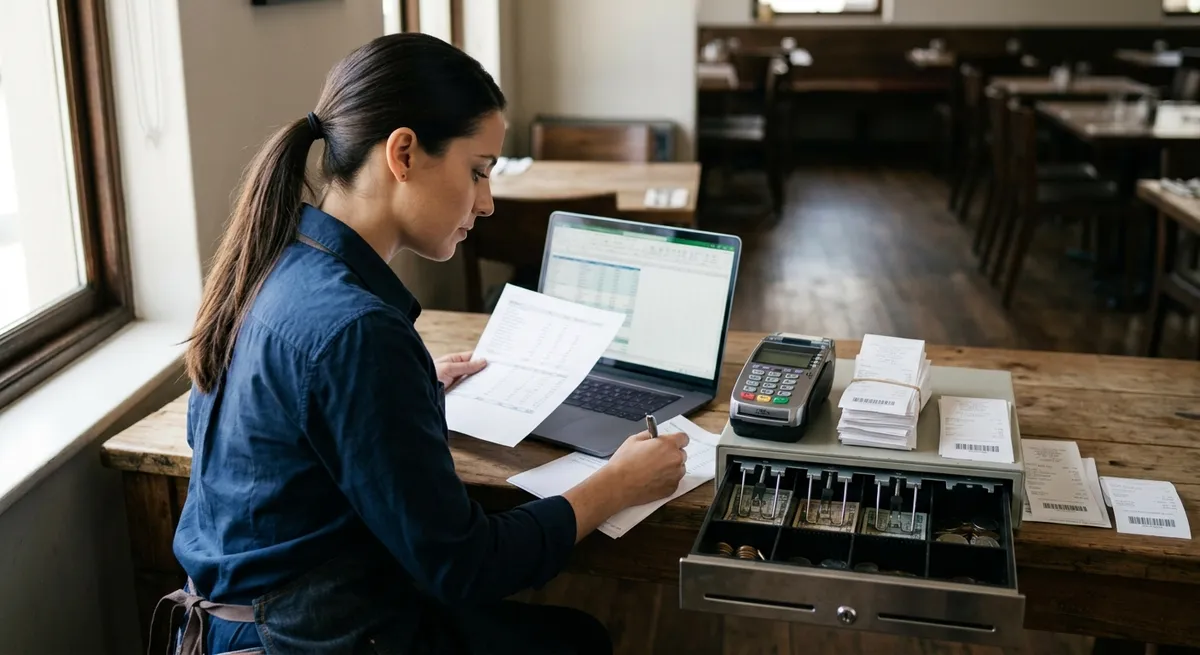
Every restaurant needs a solid daily reconciliation habit. Skipping this step is how small errors turn into big headaches by month-end.
| Transaction Type | POS Treatment | Bookkeeping Account | Reconciliation Check | Common Error |
|---|---|---|---|---|
| Cash sales | Recorded at closeout | Cash on hand | Match till count to POS report | Over/short not logged daily |
| Card sales | Batched by processor | Clearing account | Match batch total to bank deposit | Fees recorded as sales, not expense |
| Delivery-app sales | Reported by platform | Clearing account | Match settlement report to deposit | Commissions ignored, revenue overstated |
| Sales tax | Calculated per sale | Sales tax payable | Match collected tax to filed return | Tax booked as income |
| Discounts | Applied at register | Contra-revenue | Compare discount log to POS report | Discounts left unrecorded |
| Refunds | Issued through POS | Refunds/returns | Match refund log to bank activity | Refunds netted against sales |
| Gift cards | Sold and redeemed | Gift card liability | Track outstanding balance monthly | Sale treated as revenue upfront |
| Tips | Collected via card or cash | Tips payable | Match tips paid to payroll records | Tips mixed with sales revenue |
Need help with daily reconciliations? Reach out to Tidy Ledgers for support keeping your restaurant's books accurate every day.
Build a daily sales-close routine
Start with a simple sequence. Export the POS report first. Then check gross sales, discounts, voids, refunds, comps, tips, sales tax, payment types, gift cards, and deposits.
Next, compare POS totals to what's actually in the drawer. Match credit card batches to online ordering reports and delivery settlements too. This is basic bookkeeping under accrual and cash methods alike, as outlined in IRS Publication 538 [1].
If numbers don't match, write down why right away. Don't let mystery differences sit in a suspense account for weeks. Many owners find that monthly bookkeeping services catch these gaps before they snowball.
Account for payment processors and delivery platforms
Gross sales and net deposits are not the same thing. Processors take out fees, and platforms deduct commissions before they pay you[8].
Record delivery commissions separately from sales. Otherwise your revenue looks smaller than it really is[14].
- Use a clearing account to hold gross sales until deposits land
- Post fees and commissions as separate expense lines
- Review settlement timing weekly, not just at deposit time
Handle sales tax, discounts, refunds, and gift cards
Sales tax you collect isn't your money. It's a liability owed to the state[10].
Discounts, voids, and comps should reduce revenue, not get buried in expenses. Gift card sales are a liability until redeemed, not income on day one.
Rules vary by state, and Idaho has its own filing quirks worth checking closely. Our monthly bookkeeping services include restaurant sales tax filing support to keep this simple.
Restaurant Tips, Payroll, and Tax Reporting
Tips make restaurant payroll tricky. They're not like regular wages, and they come with their own rules. Payroll specialists often stress that tip records need to match up with your POS system and payroll every pay period. Small gaps can turn into big problems at tax time.
This section covers the basics. It's general information only, since wage and tax rules can change based on where you're located. Always check current guidance or talk to a payroll professional before setting policy.
Separate tips from restaurant revenue
Tips are not the same as sales revenue. Employee tips generally need their own tracking system, separate from what you ring up in sales
Inventory Bookkeeping for Food, Beverage, and Supplies
Inventory tracking makes or breaks restaurant bookkeeping. If you don't know what's on your shelves, you can't know your true food cost. Let's build a system that works.
Create a reliable receiving and counting process
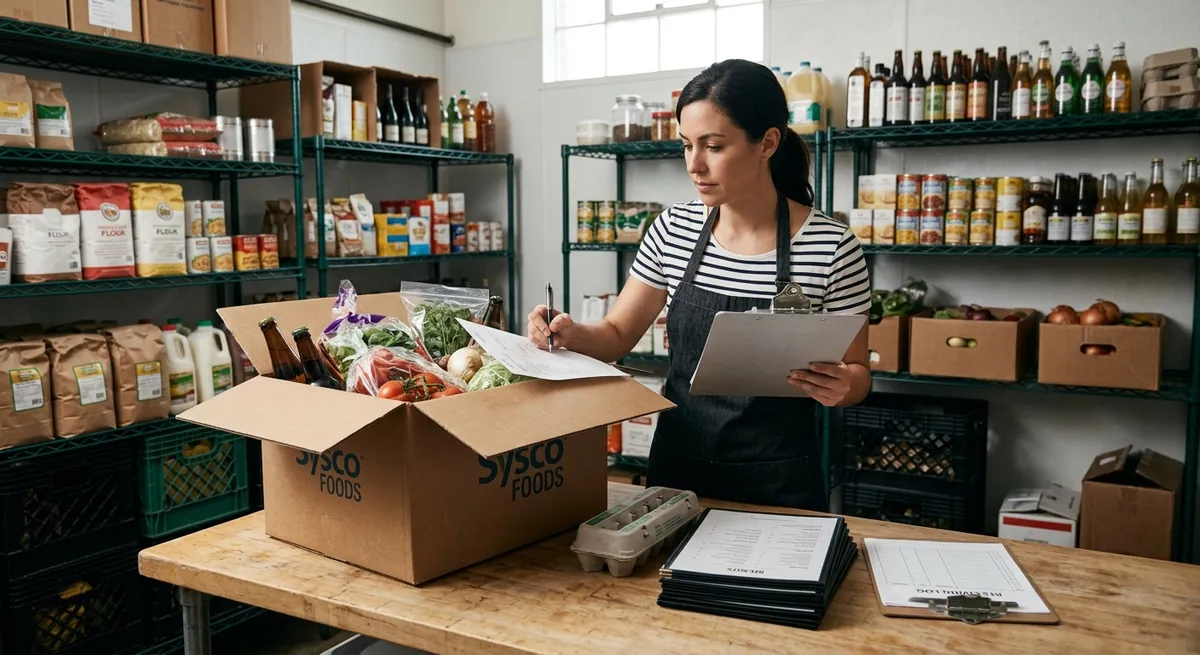
Every delivery needs a quick check before it goes on the shelf. Compare the invoice to what actually showed up: quantities, units, prices, and any substitutions.
If something's missing or swapped, note it and get a credit from the vendor. Don't enter purchases into your books until the count matches the invoice and the delivery date is confirmed.
Counts should happen on a set schedule, by location and category. That means walk-ins, freezers, dry storage, the bar, and even paper goods.
- Check the invoice against the delivery for quantity, unit size, and price
- Flag substitutions or shortages and request vendor credits right away
- Log the delivery date and store it with the invoice
- Count inventory by location: walk-in, freezer, dry storage, bar, and supplies
- Record waste, spoilage, breakage, and employee meals as separate adjustments
- Document any suspected theft and report it to management immediately
Waste and shrinkage happen at every restaurant. Track them separately instead of burying them in your food cost number, since that hides the real problem.
Choose an inventory costing method
Most restaurants choose between FIFO and weighted-average costing. FIFO assumes you use your oldest stock first, which fits food service pretty well.
Weighted-average costing smooths price swings by averaging all your costs. Either method works, but switching methods primarily to change one period's results is generally considered a red flag by accountants and auditors.Restaurant Bookkeeping Reports and Key Performance Metrics
Good bookkeeping does more than track the past. It shows where your restaurant stands right now. The right reports and metrics turn raw numbers into decisions you can act on.
Here are the KPIs most restaurant owners should track:
- Sales by channel (dine-in, takeout, delivery)
- Average check size
- Labor cost percentage
- Food cost percentage
- Prime cost
- Waste and comps
- Refunds
- Cash variance
Review the income statement and prime costs
Your income statement shows sales, cost of goods sold, labor, operating expenses, and net income. Reading it regularly helps you spot problems early. One number deserves special attention: prime cost.
Prime cost is your total cost of goods sold plus labor costs. Many operators check it every week instead of waiting for month-end.A Month-End Restaurant Bookkeeping Checklist
Month-end close pulls together everything you tracked all month. It's your reality check before you use the numbers for anything big. A solid month-end bookkeeping checklist keeps you from missing a step when you're busy.
Here's a checklist with ten steps commonly recommended for restaurants to follow each month:
- Reconcile all bank and credit card accounts
- Clear POS clearing accounts to zero
- Match processor deposits against fees charged[8]
- Count and value ending inventory[1]
- Record payroll liabilities and tip totals[2]
- Verify tip reporting matches employee records[3]
- Calculate and set aside sales tax owed
- Review accounts payable for unpaid vendor bills
- Update fixed asset records for new equipment
- Generate financial reports and review with the owner
Reconcile accounts and clear exceptions
Start with every account that touches cash: bank accounts, credit card processors, delivery apps, and petty cash. Don't forget payroll accounts and your POS clearing account.
Look for outstanding checks and duplicate deposits. Check for missing invoices and old receivables that never got paid. Flag unreconciled liabilities before they pile up.
If your numbers are off, every decision built on them is off too. Don't set prices, build a budget, or file taxes using numbers you haven't checked[8].
Finalize inventory, payroll, and tax liabilities
Next, lock in your ending inventory count. Record waste, vendor credits, and any accruals you're carrying[1]. Make sure payroll reports match what's in your general ledger, including tips and employer taxes[4].
Sales tax deserves its own line item. Write down filing deadlines instead of trusting memory, since rules shift by state and city[10].
Turn the checklist into better decisions
Once the numbers are clean, compare them to your budget, last month, and last year[5]. If labor costs crept up, adjust schedules or renegotiate a vendor contract[6]. If waste climbed, fix portions before next month[14].
Outsourced bookkeeping can make sense here, especially for restaurants with heavy transaction volume or complicated payroll. Outsourced bookkeeping prices reportedly vary widely based on transaction volume, payroll complexity, cleanup needs, location, and the scope of services. Request quotes that clearly specify what is included.
When to Use Restaurant Bookkeeping Services
Some owners handle their own books just fine for years. Others hit a wall fast, especially once the business grows past one location or one revenue stream. Knowing when to bring in help can save you money, not just time.
Signs your records need professional support
A few warning signs point to trouble. If your daily sales don't match your deposits, something's off in the process. If reconciliations pile up week after week, you're flying blind on cash flow.
- Unexplained gaps between register totals and bank deposits
- Bank and credit card reconciliations running weeks behind
- Food-cost reports that don't line up with actual purchases[7]
- Missed sales tax or payroll filings
- Vendor balances going unpaid past terms
- Confusion over tip reporting or payroll deductions
- Making decisions based only on the bank balance, not real profit
Growth adds pressure to all of this. A second location, a delivery app, catering orders, or alcohol sales each bring their own accounting rules[6]. Tip pooling and split shifts make payroll even messier. Understanding how tip income affects payroll reporting becomes harder as staffing grows.
It helps to know what bookkeeping actually covers. Bookkeeping tracks and organizes your financial records. It's not tax planning, legal advice, or HR guidance, though a good bookkeeper will flag issues so you can loop in the right professional.
What a restaurant bookkeeping partner should provide
Not every bookkeeper understands restaurants. Look for someone who's worked with POS systems, processor deposits, inventory counts, payroll, tips, and sales tax together[8]. Restaurant accounting has quirks that general bookkeeping doesn't cover[5].
Before signing on with anyone, ask direct questions:
- How often do you reconcile accounts?
- What reports will I get, and how often?
- How do you flag and explain exceptions?
- Who collects invoices, receipts, and other source documents?
- How is my data kept secure?
- Do you use a consistent chart of accounts built for restaurants?
A solid partner should have documented processes, not guesswork. They should also be upfront about where their services end, especially around tax filing and legal matters[10]. Clear boundaries protect you and them.
This is exactly where Tidy Ledgers Bookkeeping fits in. We help restaurants organize recurring bookkeeping tasks, keep payroll-related records straight, manage sales tax workflows, and deliver financial reports you can actually use to run the business. If any of the warning signs above sound familiar, it's worth a conversation.
Frequently Asked Questions
How often should a restaurant reconcile its sales?
Reconcile your POS and payment processor daily. This catches missing deposits, refund errors, or skimming before they pile up. Review sales trends weekly to spot patterns in food and labor costs, combined, these two line items make up your "prime cost," which industry benchmarks typically place between 55% and 65% of revenue, depending on concept and service style.
Do a full account reconciliation monthly, but don't wait until then to check anything. Errors found weeks later are much harder to trace back to a specific shift or transaction.
How should restaurants record tips in their books?
Keep tips separate from your restaurant's actual revenue. Tips belong to employees, not the business, so mixing them into sales numbers muddies your real profit picture. Reconcile tip totals against your POS reports and payroll records every pay period to catch mismatches early.
Rules get tricky fast: tip pools, service charges, and the tip credit allowed under the Fair Labor Standards Act all have specific requirements, and the IRS requires large establishments to file Form 8027 and allocate tips if reported amounts fall below about 8% of gross receipts. Given how much can go wrong here, it's worth having a payroll professional review your setup at least once a year.
What is the best inventory method for a restaurant?
FIFO (first in, first out) assumes you sell your oldest stock first, which fits how most kitchens operate and gives a realistic view of food cost. Weighted-average costing smooths out price swings by averaging costs across all inventory, which can be simpler if you buy the same items at different prices throughout the month. Neither method is universally better; it depends on your POS and inventory software, how much your food prices swing, and what your tax preparer or accountant recommends.
Whatever you pick, stay consistent and do regular physical counts. With food costs typically running 28-35% of revenue, sloppy inventory tracking can quietly wreck a restaurant's already thin profit margin.
Conclusion
Restaurant bookkeeping isn't complicated, but it does demand consistency. Daily sales reconciliation, correct tip records, and steady inventory counts are the base everything else builds on. Skip these, and small errors turn into real losses fast.
Weekly KPI checks and complete month-end reports show you food costs, labor, and cash flow. That information helps when margins are already thin. Catching a problem early is a lot cheaper than fixing it after the fact.
You don't have to manage all of this alone. A clear process or a bookkeeping partner who knows the restaurant business cuts down on paperwork and gives you real numbers to work with.
Ask Tidy Ledgers Bookkeeping about a restaurant bookkeeping workflow built around your POS, payroll, inventory, sales tax, and reporting needs. Your margins are too tight to guess.
Related Articles
- Bookkeeping for Driggs and Teton Valley businesses
- Bookkeeping for Island Park businesses and seasonal operators
- Monthly BookkeepingCategorized transactions, reconciled accounts, and clean monthly financials, closed on time, every month
- PayrollAccurate payroll with Idaho withholding, unemployment, and W-2 / 1099 filings handled for you
- Sales & Use Tax FilingIdaho sales and use tax set up, tracked, and filed on the right schedule, resort-city taxes included
- Financial Reporting & InsightsClear monthly reports, AP/AR, 1099s, and KPIs that turn your numbers into confident decisions
Common questions
How often should a restaurant reconcile its sales?
Reconcile your POS and payment processor daily. This catches missing deposits, refund errors, or skimming before they pile up. Review sales trends weekly to spot patterns in food and labor costs, since those two line items alone can eat 60-70% of revenue. Do a full account reconciliation monthly, but don't wait until then to check anything. Errors found weeks later are much harder to trace back to a specific shift or transaction.
How should restaurants record tips in their books?
Keep tips separate from your restaurant's actual revenue. Tips belong to employees, not the business, so mixing them into sales numbers muddies your real profit picture. Reconcile tip totals against your POS reports and payroll records every pay period to catch mismatches early. Rules get tricky fast: tip pools, service charges, and the tip credit allowed under the Fair Labor Standards Act all have specific requirements, and the IRS requires large establishments to file Form 8027 and allocate tips if reported amounts fall below about 8% of gross receipts. Given how much can go wrong here, it's worth having a payroll professional review your setup at least once a year.
What is the best inventory method for a restaurant?
FIFO (first in, first out) assumes you sell your oldest stock first, which fits how most kitchens actually operate and gives a realistic view of food cost. Weighted-average costing smooths out price swings by averaging costs across all inventory, which can be simpler if you buy the same items at different prices throughout the month. Neither method is universally better; it depends on your POS and inventory software, how much your food prices swing, and what your tax preparer or accountant recommends. Whatever you pick, stay consistent and do regular physical counts. With food costs typically running 28-35% of revenue, sloppy inventory tracking can quietly wreck a restaurant's already thin profit margin.

Want this handled for you?
Get a free, no-obligation quote and a quick health check of where your books stand. We reply within one business day. No pitch, no pressure.