

Take the checklist with you
Use the two-page PDF each month to gather records, work through all 12 close steps, track open items, and sign off on the finished period.
Build a dependable month-end routine
A steady month-end bookkeeping routine turns scattered transactions into information you can use. Instead of waiting until tax season to find out whether the books are right, you finish each month with reconciled accounts, documented questions, and reports that reflect what actually happened.
This checklist is for small and midsize businesses across the United States. The exact adjustments you need will depend on your accounting method, industry, and financial systems, but the order of operations stays broadly useful: gather the evidence, record the activity, reconcile the balances, review the reports, and document the close.
The IRS does not require every business to use one particular bookkeeping system. It does require records that support the income, expenses, and credits reported on a return. IRS Publication 583 also explains that good records help a business prepare financial statements and manage its operations. This article provides general bookkeeping information, not individualized tax or legal advice.
Key takeaways
Use one cutoff date and the same checklist every month. Gather the evidence first, then work through the accounts and reports in a consistent order.
- Gather statements, invoices, receipts, and payroll reports before reviewing balances.
- Reconcile every applicable bank, credit-card, payment-processor, loan, and payroll-liability account.
- Review receivables, payables, and timing adjustments in light of the business's accounting method.
- Read the profit and loss statement and balance sheet together; profit is not the same as cash.
- Keep an open-items log, resolve material differences, and lock the period only after review.
- Ask for professional cleanup when reconciliations, liability balances, or financial reports remain unreliable.
Set up the month-end close before you start
A close is easier when everyone knows what "done" means. Choose a consistent cutoff date, assign responsibility for each task, and decide when the owner or manager will review the finished reports. A simple business might close in one sitting. A company with payroll, inventory, several payment platforms, or multiple locations may need a few days.
The records should cover the same cutoff date. A bank feed can help with data entry, but it does not replace the statement used for reconciliation. Keep supporting documents organized and accessible. The IRS lists invoices, receipts, account statements, deposit slips, canceled checks, and similar records as examples of documents that support entries in a business's books.
It also helps to carry forward an open-items list from the prior month. Note uncleared checks, deposits in transit, missing receipts, disputed invoices, and questions waiting on an owner, vendor, payroll provider, or accountant. That keeps a known timing difference from being rediscovered as a new problem.
- Bank and credit-card statements
- Payment-processor and merchant-account reports
- Sales invoices, customer payments, and credit memos
- Vendor bills, receipts, and reimbursement records
- Payroll registers and tax-liability reports
- Loan statements and amortization schedules
- Inventory, fixed-asset, or prepaid-expense records when applicable
1. Categorize and review every transaction
Start with uncategorized transactions and anything in a "to review" queue. Match each charge, deposit, transfer, refund, and fee to a receipt, invoice, bill, or other supporting record.
Do not guess at tax treatment just to clear the queue. Flag uncertain items and record what information is missing. A short question now is easier to resolve than an unexplained balance several months later.
- Duplicate bank-feed imports
- Personal spending in a business account
- Transfers recorded as income or expenses
- Loan proceeds recorded as revenue
- Customer deposits recorded twice
- Refunds or chargebacks posted to the wrong account
- Large or unusual transactions that need an explanation
2. Reconcile bank, credit-card, and payment accounts
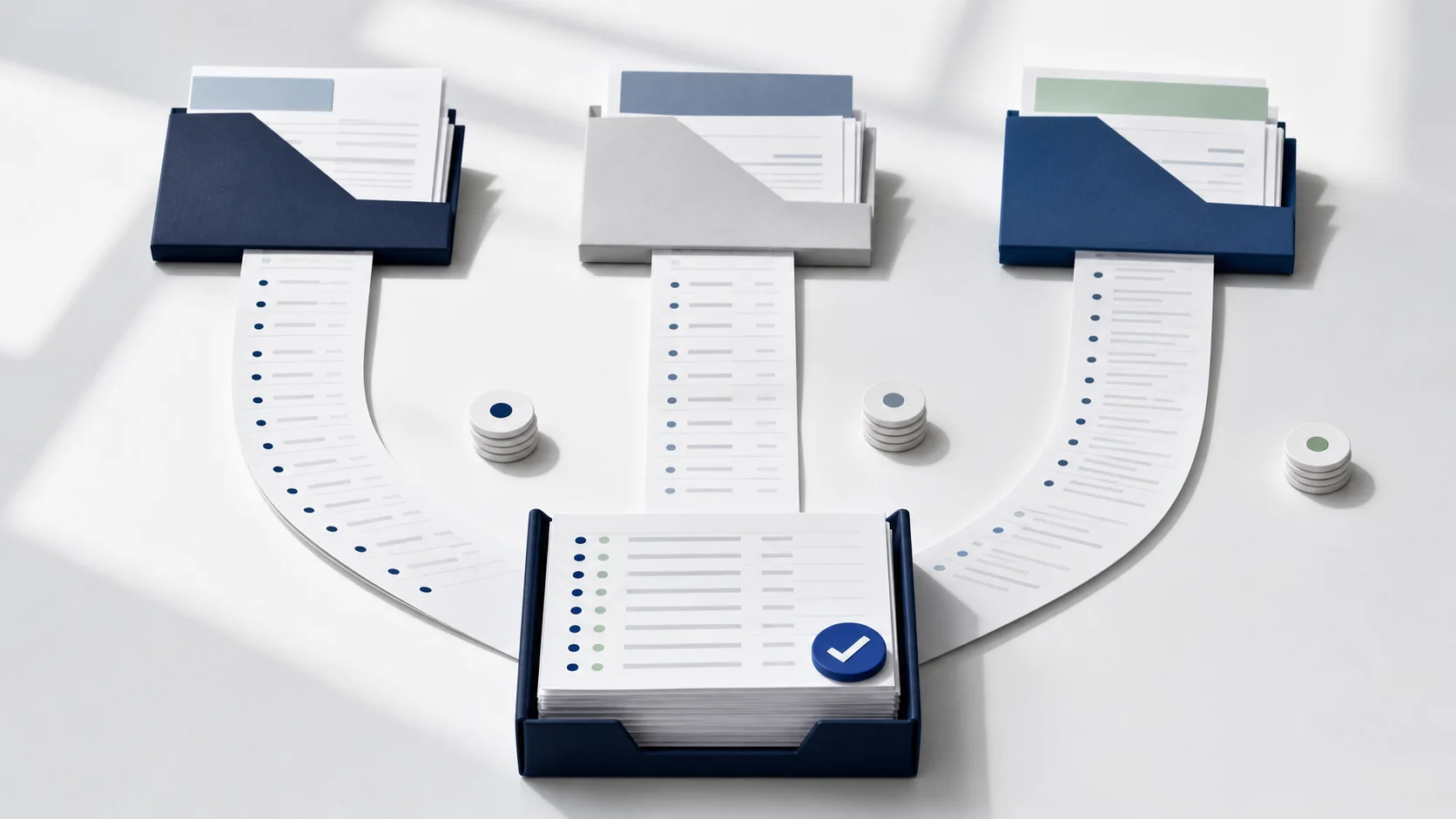
Reconcile each checking, savings, credit-card, and payment-processor account through the statement date. The adjusted balance in the books should agree with the adjusted balance supported by the statement.
For bank accounts, account for outstanding checks, deposits in transit, bank charges, interest, and transactions recorded at the wrong amount. For credit cards, confirm the statement balance, payments, credits, fees, and any charges still pending after the cutoff. For payment processors, reconcile gross sales, refunds, processing fees, reserves, and net deposits rather than treating the deposited amount as total revenue.
IRS Publication 583 specifically recommends reconciling a business checking account each month. Reconciliation verifies the balance, captures fees or errors missing from the books, and separates true discrepancies from normal timing differences.
Never force a reconciliation by posting an unexplained adjustment. If the account does not balance, trace the difference. Common causes include duplicated imports, transposed digits, deleted reconciled transactions, an incorrect opening balance, or a transfer posted on only one side.
3. Verify loans, payroll, and other liability accounts
Compare each loan balance with the lender's statement. Separate principal from interest according to the lender's records or amortization schedule. A payment posted entirely to interest expense will understate the liability; a payment posted entirely to principal will understate expense.
Review payroll wages, employer taxes, employee withholdings, benefits, and net-pay withdrawals against the payroll provider's reports. Payroll-liability accounts should reflect amounts still owed at the cutoff date. An old or negative balance deserves investigation; it should not be cleared simply to make the report look tidy.
Use the same approach for sales-tax payable, gift cards, customer deposits, merchant reserves, or other liabilities that apply to the business. Compare the ledger with the best available third-party report and document any timing difference.
- Bank: compare the monthly statement and confirm the timing of outstanding checks or deposits.
- Credit card: compare the card statement, match the cutoff, and investigate pending or duplicated charges.
- Payment processor: compare the payout report and reconcile fees, refunds, reserves, gross activity, and net deposits.
- Loan: compare the lender statement or amortization schedule and reclassify principal and interest using lender support.
- Payroll liability: compare the payroll-provider report and confirm the payment date and balance due.
- Other liability: compare the relevant vendor, agency, or platform report and investigate old or negative balances.
4. Review accounts receivable
Open the accounts-receivable aging report and compare it with customer records. Look for overdue, disputed, duplicated, or potentially uncollectible balances. Match open invoices with customer payments and check for unapplied payments or unused credit memos.
This review is not only an accounting task. It gives the owner a collection list and a clearer view of near-term cash. An invoice can be properly recorded and still require follow-up.
5. Review accounts payable
Review the accounts-payable aging report for unpaid bills, duplicates, disputed charges, stale balances, and bills waiting for approval. Confirm vendor names, due dates, amounts, and supporting documents.
Keep cash-planning decisions separate from bookkeeping corrections. Choosing when to pay a valid bill is a management decision. Fixing a duplicated bill or a wrong amount is an accounting correction.

6. Record accruals and deferrals only when relevant
The close should reflect the accounting method the business actually uses. Under the cash method, income is generally recorded when received and expenses when paid. Under the accrual method, income and expenses are generally recorded when earned or incurred, even when cash moves in another period.
Accrual-basis books may need entries for services received but not yet billed, prepaid insurance, subscriptions, deferred revenue, or similar timing items. Do not add these entries by habit. Apply a consistent policy and keep the calculation that supports each adjustment.
The Small Business Administration's finance guide summarizes the cash and accrual methods. IRS Publication 538 covers federal tax accounting periods and methods in more detail. Choosing or changing a method can have tax consequences, so questions about the right method or a material adjustment belong with a qualified accountant or tax professional.
7. Analyze the profit and loss statement
Reconciled accounts are the foundation. The report review is where the owner turns the close into decisions. Compare revenue, cost of goods sold, gross margin, operating expenses, and net income with the prior month, the same month last year, or the budget. Investigate unexpected swings rather than accepting them at face value.
Profit is not the same as cash in the bank. A business can report a profit while cash is tied up in receivables, inventory, debt payments, or equipment.
- Is revenue complete and posted to the right categories?
- Do gross margins make sense for the sales mix?
- Did a recurring expense disappear or appear twice?
- Are owner draws, loan payments, or asset purchases incorrectly shown as expenses?
- Do payroll and contractor costs match actual staffing activity?
8. Check the balance sheet
Review cash, receivables, inventory, fixed assets, credit cards, loans, payroll liabilities, other liabilities, and equity. Watch for unexplained negative balances, suspense accounts, old reconciling items, and balances that do not agree with external statements.
The balance sheet often exposes errors that the profit and loss statement does not. For example, a loan payment posted incorrectly may leave expenses looking reasonable while the loan balance is wrong.
9. Review cash-flow information
If the accounting system produces a cash-flow statement, connect operating, investing, and financing activity to real events in the business. Review customer collections, vendor payments, payroll, debt service, equipment purchases, owner contributions, and owner draws.
Then look forward. Which bills are due before the next major customer receipts? Are receivables slowing down? Is growth consuming cash faster than profit is being generated? Clean books cannot make those decisions for an owner, but they make the pressure visible early enough to act.
10. Maintain an open-items log
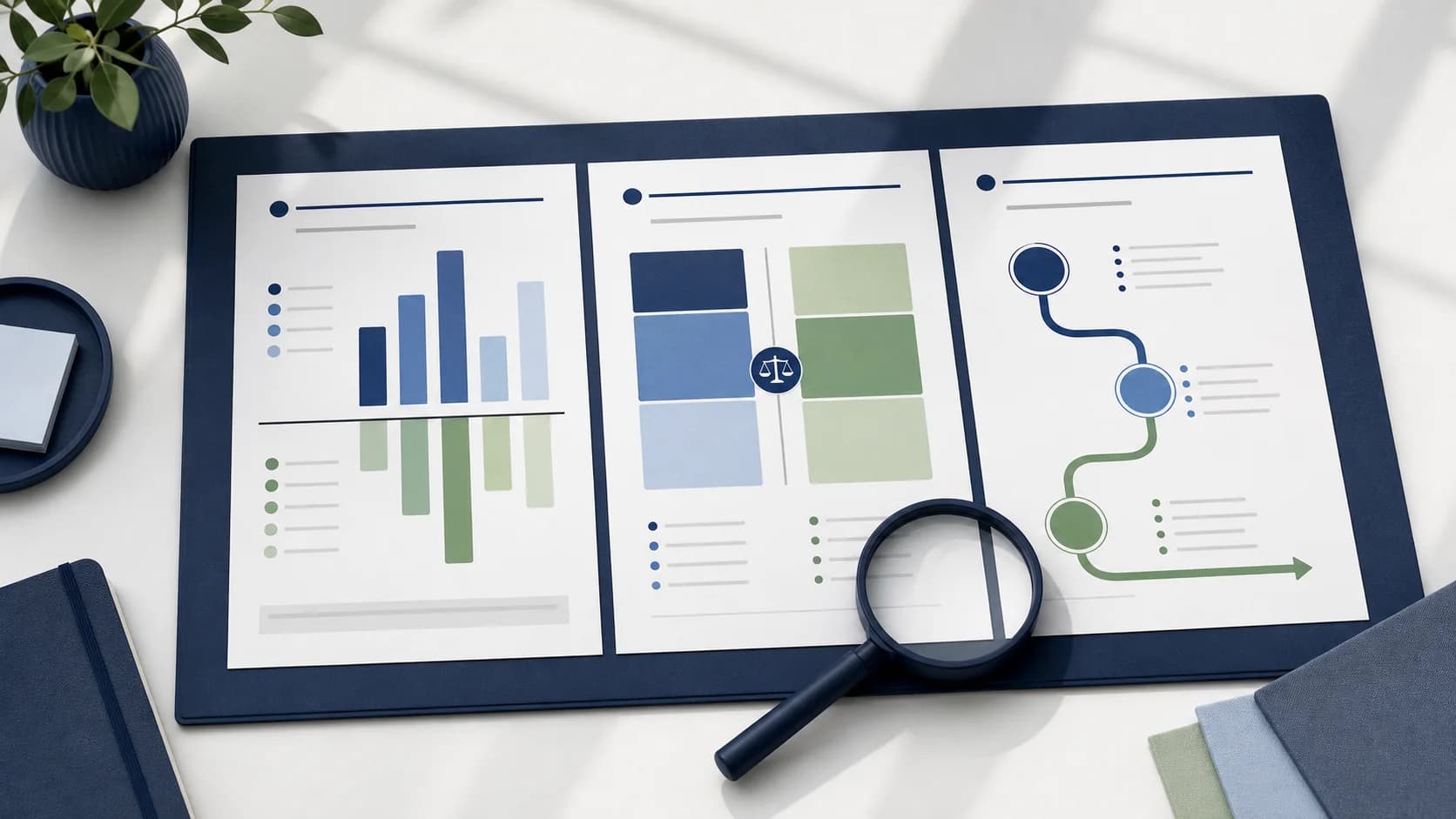
The close is not finished when the accounts merely look plausible. It is finished when remaining questions are visible, material differences are resolved, and another person can understand what was done.
Record each unresolved item, the amount involved, the information needed, who owns the follow-up, and the expected resolution date. Separate normal timing items from errors. If an issue is not material enough to hold the close open, document why and carry it forward.
11. Review and approve the reports
Have the owner, manager, or designated reviewer look at the profit and loss statement, balance sheet, reconciliation reports, receivable aging, payable aging, and open-items log. The reviewer should ask about unusual movements and confirm that the reports match what happened operationally.
12. Save support and lock the period
Store statements, reconciliations, journal-entry support, and the open-items log with a consistent month label. Export or preserve the final reports if the software's history is limited.
After review, set a closing date or lock the period if the accounting system supports it. Restrict changes to closed months and document any approved late adjustment. A lock is not a substitute for resolving discrepancies; it protects a reviewed period from accidental changes.

Know when the books need professional cleanup
A clean close gives an owner a clearer view of profit, cash, customer balances, bills coming due, payroll liabilities, debt, and spending patterns. It also makes conversations with a CPA, tax preparer, or lender more efficient because the underlying accounts have already been reconciled.
A bookkeeper can handle recurring categorization, reconciliations, monthly reporting, and close procedures. A CPA or tax preparer should handle tax positions, tax returns, and complex accounting-method questions. The two roles work best together.
Tidy Ledgers provides remote monthly bookkeeping, catch-up and cleanup, QuickBooks Online support, and financial reporting for small and midsize businesses across the United States. The firm works alongside clients' CPAs and tax preparers but does not prepare business or personal income tax returns.
- Bank or credit-card accounts that never reconcile
- Missing statements from prior months
- Income entered twice or transfers that cannot be explained
- Negative asset or liability balances that do not make sense
- Receivables or payables that have remained open for months
- Payroll liabilities that do not match payroll reports
- Personal and business spending repeatedly mixed together
- Prior periods changing without documentation
- Financial reports the owner does not trust
Make the monthly close a business habit
Follow the same sequence every month: gather documents, categorize transactions, reconcile every account, review receivables and payables, make supported timing adjustments when appropriate, read the financial statements, document open questions, obtain review, and lock the period.
Consistency matters more than a complicated process. A short checklist completed and reviewed every month is more useful than an elaborate procedure that only happens at year-end.
If the close keeps slipping or the numbers never quite add up, start with a bookkeeping review. The right next step may be a one-time cleanup, a better monthly process, or ongoing support.
Common questions
What should be included in a month-end bookkeeping checklist?
A practical checklist should include gathering source documents, categorizing transactions, reconciling bank and credit-card accounts, checking payment processors and loans, reviewing payroll liabilities, reviewing receivables and payables, recording supported timing adjustments when relevant, analyzing the profit and loss statement and balance sheet, documenting open items, obtaining review, and locking the period.
How often should a small business reconcile its accounts?
The IRS recommends reconciling a business checking account each month. A small business should also reconcile each applicable credit-card, payment-processor, loan, and similar balance on a consistent schedule tied to its statements. Businesses with high transaction volume or greater fraud risk may also review activity more frequently.
Should a cash-basis business record accruals at month-end?
Not automatically. Timing entries should match the business's accounting method and reporting needs. If the treatment is unclear, material, or tied to tax reporting, ask the business's accountant or tax professional before posting an adjustment.
When should a small-business owner hire a bookkeeper or request cleanup?
Get help when accounts do not reconcile, records are missing, personal and business expenses are mixed, payroll liabilities are unreliable, prior months keep changing, or the financial reports cannot support decisions. Fast growth, a financing application, a software change, or an approaching tax deadline can also make professional cleanup worthwhile.
Does a bookkeeper replace a CPA or tax preparer?
No. A bookkeeper keeps day-to-day records current, reconciles accounts, and prepares dependable monthly reports. A CPA or tax preparer handles tax filing, tax positions, and other specialized accounting or advisory work. Clean books help the tax professional work from reliable numbers.
Sources
- IRS Publication 583, Starting a Business and Keeping Records — Recordkeeping systems, supporting documents, financial statements, and monthly bank reconciliation.
- U.S. Small Business Administration, Manage Your Finances — Bookkeeping, balance sheets, accounting methods, receivables, payables, cash, reconciliation, and payroll.
- IRS Publication 538, Accounting Periods and Methods — Federal tax accounting periods and cash and accrual methods.
- IRS, What Kind of Records Should I Keep? — General business record categories and supporting documentation.