

Key Takeaways
- Form 1099-NEC is generally due to recipients and the IRS by January 31 for reportable nonemployee compensation.
- Form 1099-MISC deadlines vary by recipient delivery, electronic filing, and paper filing requirements.
- Businesses must count most information returns when deciding whether the 10-return e-filing threshold applies.
- Accurate W-9 information and a year-end review of contractor payments can reduce filing errors and penalties.
A missed 1099 deadline can turn a routine bookkeeping task into an avoidable tax penalty for a small business. If you pay contractors, freelancers, landlords, or attorneys, the IRS expects you to report those payments. The paperwork also has strict due dates. Miss one, and the fines can add up fast.
This guide covers the deadline calendar, how to choose the right form, and the e-filing rules that now apply to most small businesses. It also explains how to fix errors after filing and set up a simple tracking system. That way, next year's deadlines won't catch you off guard.
Rules can change each year. Check the current IRS instructions or speak with a tax professional before you file.
1099 Deadlines at a Glance for Small Businesses
Missing a 1099 deadline can cost you real money in penalties. Most small business filing dates follow a simple pattern each year. Here's a quick snapshot before we get into the details.
| Form | Recipient Copy Due | IRS Paper Filing | IRS Electronic Filing |
|---|---|---|---|
| 1099-NEC | January 31 | January 31 | January 31 |
| 1099-MISC | January 31 | Generally last day of February | Generally March 31 |
| 1099-INT/DIV | January 31 | Generally last day of February | Generally March 31 |
Many tax practitioners reportedly recommend setting an internal deadline at least one to two weeks before the IRS due date, though this is a general best practice rather than an IRS-mandated rule. That extra time gives you a chance to fix errors before they lead to penalties.
The Main January 31 Deadline
Form 1099-NEC is generally due to both the recipient and the IRS by January 31. Check the applicable IRS instructions for the filing year. This form covers payments to independent contractors and freelancers. It's one of the few 1099 forms with the same paper and electronic filing dates.
If January 31 falls on a weekend or federal holiday, the deadline moves to the next business day. Still, don't rely on that change. Plan as if the date won't move.
There is generally no automatic extension for sending the recipient copy of Form 1099-NEC, although limited extensions may be available in specific circumstances under current IRS rules. Keeping up with your payroll and 1099 filings during the year makes this deadline much easier to meet.
Important Dates for 1099-MISC and Other Forms
Form 1099-MISC works a little differently. The recipient copy is usually due by January 31, but the IRS deadline depends on how you file.
Paper filers often face an earlier IRS deadline, usually the last day of February. Electronic filers generally have until March 31. Check the current IRS General Instructions for Certain Information Returns for the exact dates for your tax year.
A Simple Year-End Deadline Calendar
Build your own calendar to stay ahead of the rush. Try this sequence:
- Collect W-9 forms before paying any new contractor
- Reconcile vendor records in December
- Prepare and review draft forms in early January
- Fix errors soon after filing, not months later
Set internal approval dates one to two weeks before the real deadline. That small cushion can protect you from last-minute problems.
Which Payments Require a 1099?
This is where many small business owners get stuck. You paid someone for work, but does that payment need a 1099? The answer depends on who you paid, how you paid them, and what the payment covered.
Getting this wrong can lead to missed deadlines or the wrong form. Don't guess at the classification. Record your reason for each vendor. You'll have support if the IRS asks questions later.
When Form 1099-NEC Applies
Form 1099-NEC covers nonemployee compensation. It applies to payments to independent contractors, freelancers, and others who provide services but aren't on your payroll.
Common examples include contractors, consultants, graphic designers, attorneys, and repair technicians. If you paid an individual or unincorporated business for work, this form usually applies.
Before filing, check the current year's IRS dollar threshold and payment rules. These details can change, so don't rely on last year's numbers. If you need help, 1099 filing support can help you review each vendor.
When Form 1099-MISC Applies
Form 1099-MISC still exists, but it now covers fewer types of payments. Think rents, prizes and awards, certain medical or health care payments, and other miscellaneous income.
Nonemployee compensation used to appear on this form. The IRS moved it to Form 1099-NEC. Don't choose a form based on the wording on a vendor's invoice. The payment type, not the bill's description, determines the form.
Payments That May Not Require a 1099
Not every business payment needs a 1099. Payments made by credit card or through third-party networks like PayPal are often reported by the payment processor instead of you.
Payments to corporations are usually exempt as well, but exceptions apply. Attorney fees and some health care payments still require reporting even when the recipient is incorporated.
Before skipping a form, check four things: payment method, recipient's business type, service category, and the current IRS instructions. Our 1099 filing support team can help you separate exempt payments from those that still need reporting.
W-9 Collection and Contractor Recordkeeping
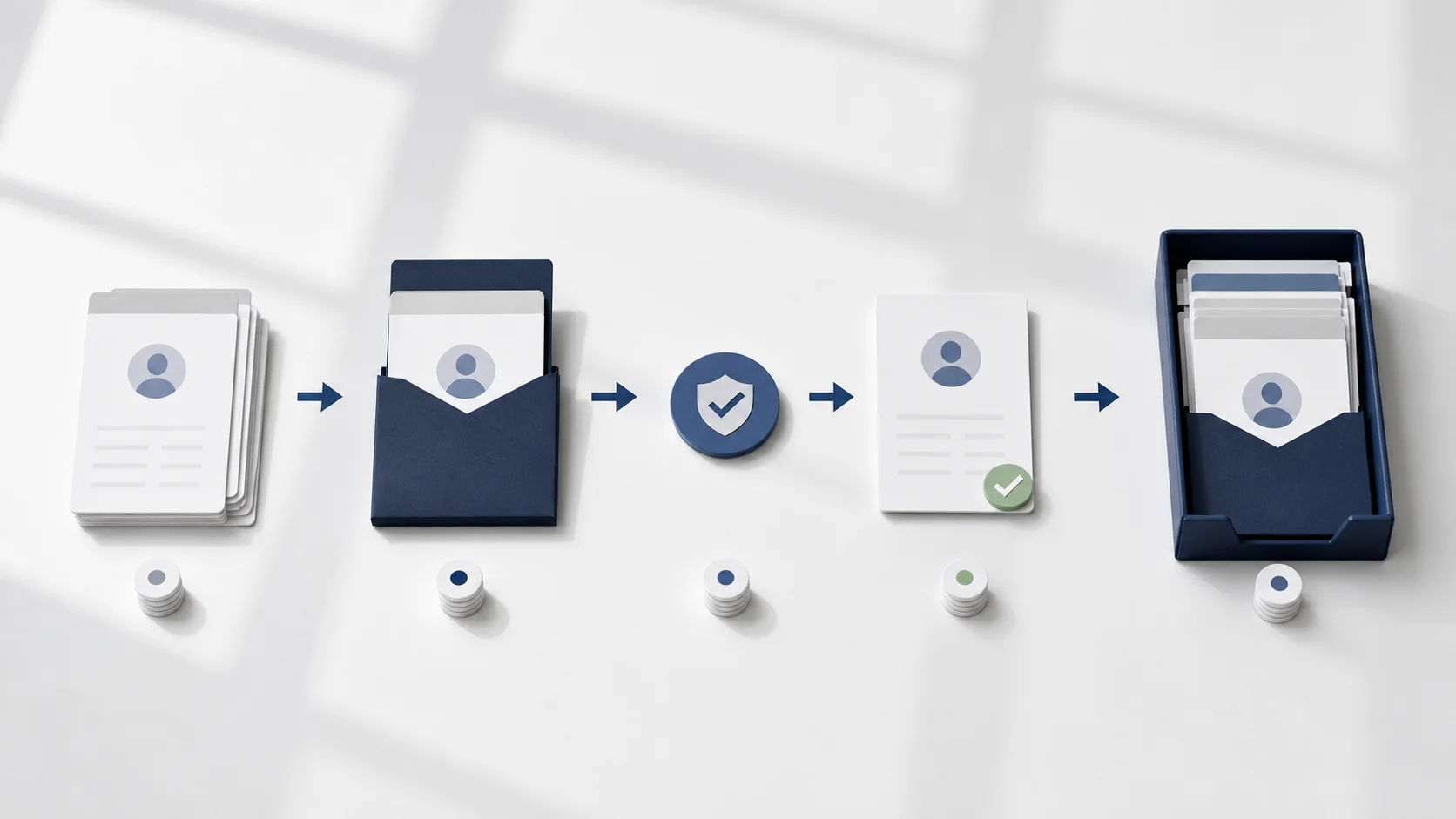
A reliable 1099 process starts before the first payment. Ask each independent contractor to complete Form W-9 before work begins, then review it for a legal name, business name when applicable, federal tax classification, address, and taxpayer identification number. The IRS recommends obtaining the form up front because missing or incorrect information can delay filing and may trigger backup-withholding requirements.
Keep the completed W-9 in a secure record system. Do not place taxpayer identification numbers in a shared spreadsheet, email thread, or task board. Your working tracker only needs operational details such as the contractor name, whether a current W-9 is on file, the payment method, the year-to-date total, and who is responsible for resolving an open item.
Review the contractor list during the year instead of waiting until January. A simple monthly or quarterly check should answer these questions:
- Is a signed W-9 on file before the next payment?
- Does the payee name and tax classification match the vendor record?
- Were payments made by check, ACH, card, or a third-party network?
- Are refunds, reimbursements, and nonservice payments separated from service fees?
- Did the contractor report a name, address, or entity change that requires a new W-9?
Form W-9 is kept with your records rather than filed with the IRS as part of the 1099 submission. If a payee will not provide a correct taxpayer identification number, review the current IRS Form W-9 requester instructions and consult a tax professional about backup withholding before making another reportable payment.
E-Filing Requirements and 1099 Submission Options
The IRS has cut way down on paper filing. Most small businesses now need to file electronically, and skipping this rule can trigger penalties. The IRS IRIS filing guidance explains the current electronic submission options. This change has added work for owners who once mailed a few paper forms each year.
The 10-Return E-Filing Threshold
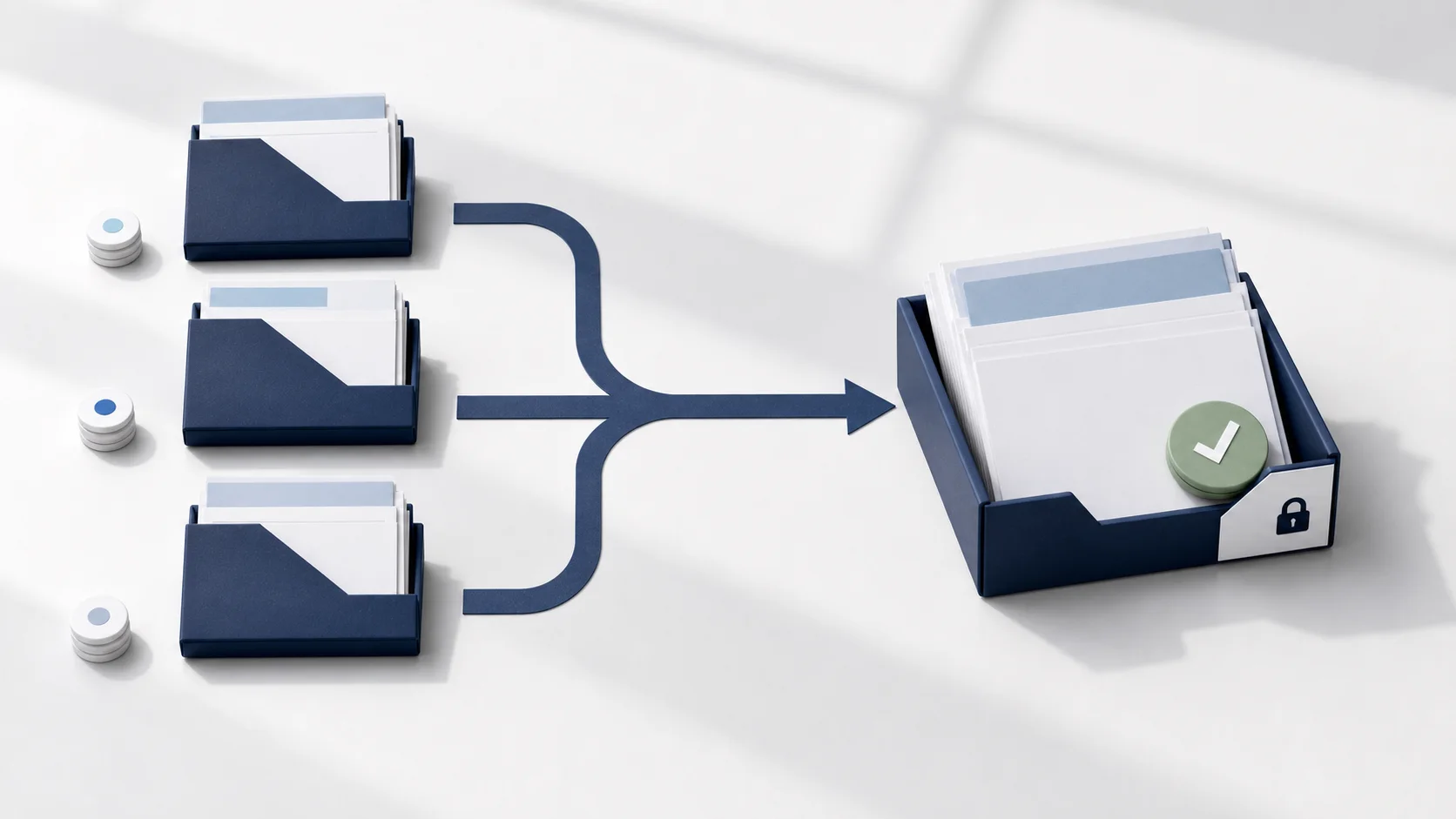
For current filing years, businesses that meet or exceed the IRS aggregate information-return threshold generally must e-file. Confirm the threshold and which returns count in the current IRS instructions. The count isn't limited to 1099-NEC forms.
The IRS combines most information return types. Say you send 6 Forms 1099-NEC to contractors and 5 Forms 1099-MISC for rent or other payments. That's 11 forms total. You're over the threshold, so paper filing likely won't work.
This catches many small businesses off guard. They assume each form type gets its own count. Checking your totals during your monthly bookkeeping routine can help you spot the issue early instead of scrambling in January.
IRS IRIS and Other Filing Methods
The IRS offers a free tool called IRIS, or the Information Returns Intake System, for electronic 1099 filing. Eligible businesses of any size can use it, including small businesses filing only a few forms.
Software providers and payroll platforms often offer e-filing too. Many bookkeeping tools can send forms to the IRS and recipients at the same time.
Before choosing a method, confirm a few details. Check that you're registered as a transmitter, recipient copies go out on time, and the system allows later corrections.
What to Keep After Filing
Once you file, don't toss your records. Keep copies of the forms you sent, proof that recipients got their copies, W-9s, and payment reports.
Save correction records and IRS confirmation details too. They create a paper trail if a contractor questions a form or the IRS sends a notice.
- Sort records by tax year to avoid mix-ups
- Store taxpayer ID numbers securely, not in shared files
- Keep confirmation emails or filing receipts from your e-file method
The cost and feature comparisons below reflect general industry patterns rather than specific verified pricing, since costs vary by provider and can change over time. Confirm current pricing directly with any provider before choosing a filing method.
| Filing Method | Cost | Best For | Corrections |
|---|---|---|---|
| Paper Filing | Typically low, but limited | Businesses eligible to file fewer than 10 total returns on paper | Manual and slower |
| IRS IRIS | Free | Small businesses of any size | Supported through the portal |
| Commercial E-File Software | Usually a paid subscription | Businesses wanting recipient delivery built in | Usually built in |
| Payroll Provider Filing | Often bundled with payroll fees | Businesses already using payroll software | Varies by provider |
1099-K Rules and Third-Party Payment Platforms
If your business takes payments through apps like PayPal, Square, or Venmo, you may get a Form 1099-K. This form tracks card and third-party network payments. It's different from the 1099-NEC. Confusing the two can create headaches at tax time.
Who Sends Form 1099-K?
Payment settlement companies and platforms issue Form 1099-K when your transactions meet certain rules. This includes apps that process credit card sales or peer-to-peer payments for goods and services.
Getting this form doesn't change what you owe. You still have to report your actual business income, whether or not a 1099-K arrives. The amount shown is your gross payment total, not your profit. It doesn't subtract fees, refunds, or chargebacks, so don't use it as your final income number.
Why 1099-K Thresholds Keep Changing
The Form 1099-K reporting threshold has a complicated recent history, and it's important not to rely on outdated figures. From its introduction in 2011 through 2023, the threshold was $20,000 and 200 transactions. The American Rescue Plan Act of 2021 eliminated the transaction-count requirement and lowered the dollar threshold to $600, with the IRS phasing that change in gradually using $5,000 as a transition threshold for 2024 and $2,500 for 2025.
However, that downward trend reversed in 2025. With the passage of the One Big Beautiful Bill Act (OBBBA) in July 2025, the 1099-K reporting threshold has returned to $20,000 in payments and at least 200 transactions for the 2025 tax year and beyond, replacing the lower phase-in amounts that had been scheduled to take effect. Because this rule has changed direction more than once in just a few years, don't assume any specific dollar figure, high or low, still applies without checking current IRS guidance.
Don't wait for a form to arrive before checking your records. Reconcile platform deposits throughout the year, not just in January.
Avoiding Duplicate Income Reporting
Here's a common concern: if a contractor got paid through a platform that sends a 1099-K, does the business also need to send a 1099-NEC? Do not assume that a Form 1099-K eliminates a Form 1099-NEC obligation. Determine whether the payment was made through a qualifying payment settlement entity and review the current IRS instructions for the specific transaction.
Use this checklist to stay on track:
- Download reports from each payment platform you use
- Identify your gross receipts for the year
- Separate out refunds and chargebacks
- Reconcile processing fees against deposits
- Compare bank deposits to platform totals
- Retain platform statements and supporting records for the period required by applicable federal and state tax rules; the IRS generally recommends keeping tax records for at least three years, though some businesses reportedly keep them longer as an added precaution.
Keep separate records for customer sales and contractor payments. If this reconciliation feels like too much, understanding the bookkeeper versus accountant distinction can help you decide who should handle it.
Penalties, Corrections, and a Practical Filing Workflow
The IRS can assess separate penalties when a business files an information return late or incorrectly and when it furnishes a recipient statement late or incorrectly. The amount depends on the filing year, how quickly the problem is fixed, the size of the business, and whether the IRS finds intentional disregard. Check the current IRS information return penalty schedule instead of relying on an old dollar figure.
Correct an Error as Soon as You Confirm It
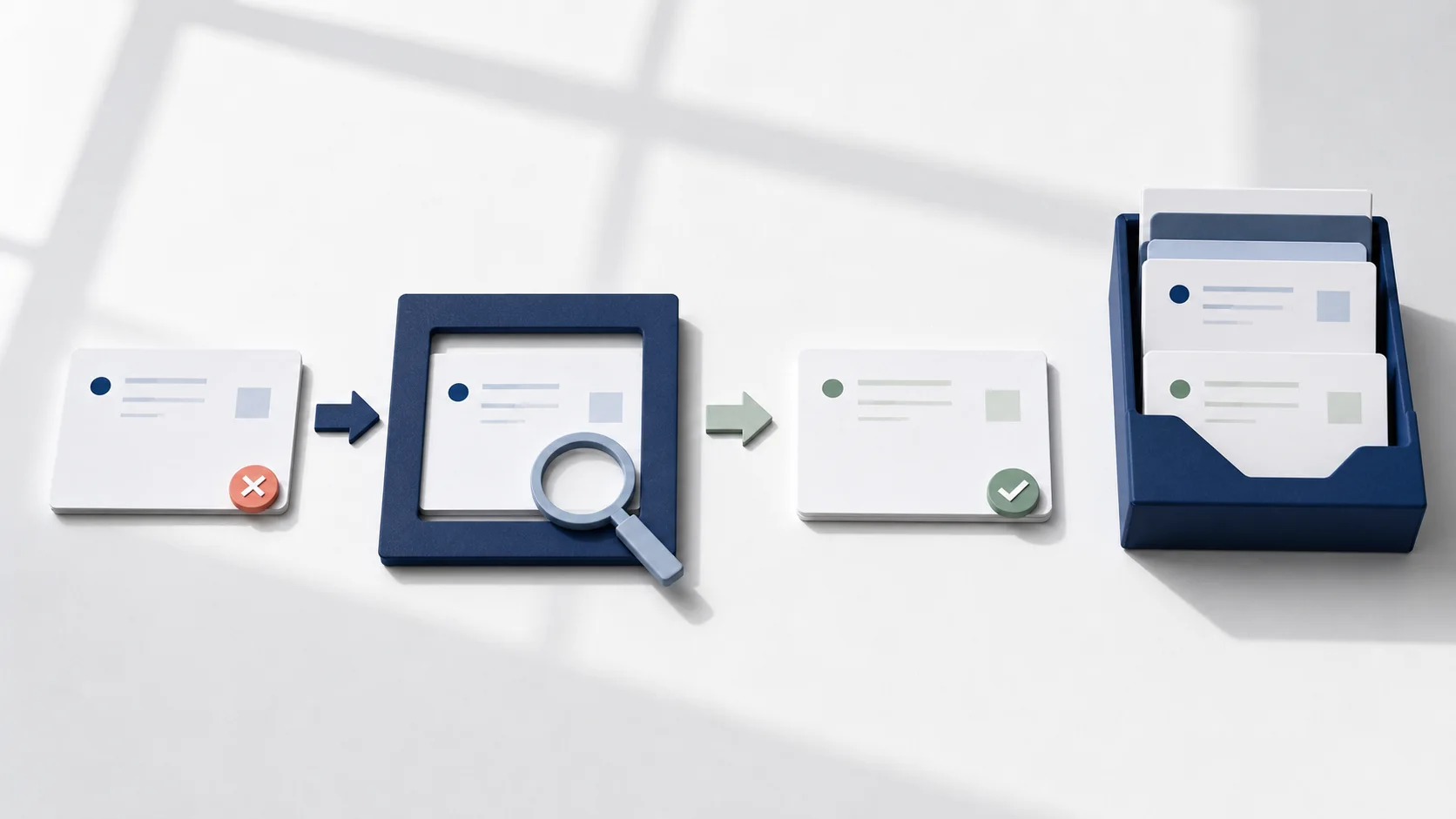
Do not file a second original return to cover a mistake. Follow the correction procedure in the current IRS general instructions. The steps differ for an incorrect amount or checkbox versus an incorrect payee name or taxpayer identification number. If the original return had to be filed electronically, the correction generally must be filed electronically too.
Keep the original filing confirmation, the corrected return, the corrected recipient statement, and a short note explaining what changed and why. That record helps the business answer questions later without reconstructing the decision from memory.
Use a Reviewable Filing Workflow
Build the filing process around a short sequence that another person can review:
- Freeze the year-end vendor payment reports after the books are reconciled.
- Compare each potential recipient with the W-9 on file and confirm the payment method.
- Separate card and third-party network payments from payments that may be reportable by the business.
- Confirm the form type and reportable amount, escalating uncertain classifications to a tax professional.
- Review names, taxpayer identification numbers, addresses, totals, and recipient delivery details before filing.
- File through the required method and save the acceptance or mailing record.
- Log any correction, deliver the corrected recipient statement, and retain the supporting records.
This process does not replace the current form instructions, but it creates clear checkpoints before a deadline and a documented path if something needs to be corrected.
How Tidy Ledgers Can Help With 1099 Compliance
Getting 1099s out on time is easier when your books stay organized all year. That's where a steady bookkeeping routine pays off.
Bookkeeping That Keeps Contractor Data Organized
Consistent monthly coding makes 1099 season much easier. When each contractor payment gets tagged correctly, you won't be digging through bank statements in January.
Good books also track payment methods as you go. That matters because credit card and app payments, such as PayPal, are often excluded from 1099-NEC reporting and handled differently. Sorting that out later takes far longer than checking it each month.
Regular reconciliations catch errors early. A missed invoice or duplicate entry is easier to fix in March than in January, when deadlines are close. Working with a monthly bookkeeping service builds that review into your routine.
Support for Filing and Year-End Review
Monthly upkeep isn't always enough. Many businesses also need hands-on help at year-end. That may include gathering W-9s, reconciling vendor totals, preparing forms, and sending copies to contractors and the IRS on time.
Support can also cover corrections after filing. Mistakes happen. Knowing how to fix them quickly can help you avoid further problems.
Before hiring anyone for this work, get clear on the scope. Ask what's included, which deadlines they'll manage, and who handles tax advice.
- Vendor data collection and W-9 tracking
- Payment reconciliation across platforms
- Form preparation and recipient delivery
- Filing coordination and correction follow-up
This support matters most for businesses with many contractors or several payment platforms. If that sounds like you, our financial reporting and 1099 support can help make year-end reporting less stressful.
Need help getting your books deadline-ready? Contact Tidy Ledgers today and let's organize your records before the next 1099 deadline sneaks up on you.
Conclusion
1099 deadlines don't have to catch you off guard. Form 1099-NEC is due January 31 to both contractors and the IRS. Form 1099-MISC has different dates based on how you file. Check the current IRS rules each year before planning your calendar.
The key to smooth filing isn't the deadline itself. It's the work you do beforehand. Collect W-9s early, reconcile contractor payments each month, and review your payment methods. That way, you'll know who needs a form. Add e-filing once you reach the 10-return threshold, and you're ready.
Keeping records organized now means fewer penalties and easier corrections later. Don't wait until January to figure out who you paid or how much.
Review your contractor list and payment records today. Then reach out to Tidy Ledgers Bookkeeping for bookkeeping and 1099 filing support before the next deadline.
Common questions
What is the deadline for Form 1099-NEC?
Form 1099-NEC is generally due to both the recipient and the IRS by January 31. If that date falls on a weekend or holiday, the deadline moves to the next business day. Unlike some other tax forms, the recipient copy deadline usually doesn't get an automatic extension, so it's smart to check the current IRS instructions each year to confirm exact dates and any rule changes.
Do small businesses have to e-file 1099 forms?
Yes, in many cases. The IRS now requires businesses to e-file if they submit 10 or more information returns total in a year, and this count adds up most 1099 types together, not just one form per type. That means even small businesses that issue a handful of different 1099s often cross the threshold without realizing it. If you're required to e-file, use the IRS IRIS system or an approved electronic filing provider instead of mailing paper forms.
What should I do if I filed an incorrect 1099?
First, double-check the correct information with the recipient, like their name, address, or taxpayer ID number. Then figure out what kind of mistake it is: wrong identifying details, an incorrect dollar amount, or even the wrong form type entirely. Once you know the issue, file a correction following the current IRS instructions as soon as you can. Acting quickly matters, since penalties for errors and late fixes can add up, so don't wait until tax season pressure builds.

Want this handled for you?
Get a free, no-obligation quote and a quick health check of where your books stand. We reply within one business day. No pitch, no pressure.