
Guide
Starting a business in Idaho: a bookkeeping and compliance checklist
Updated June 18, 2026
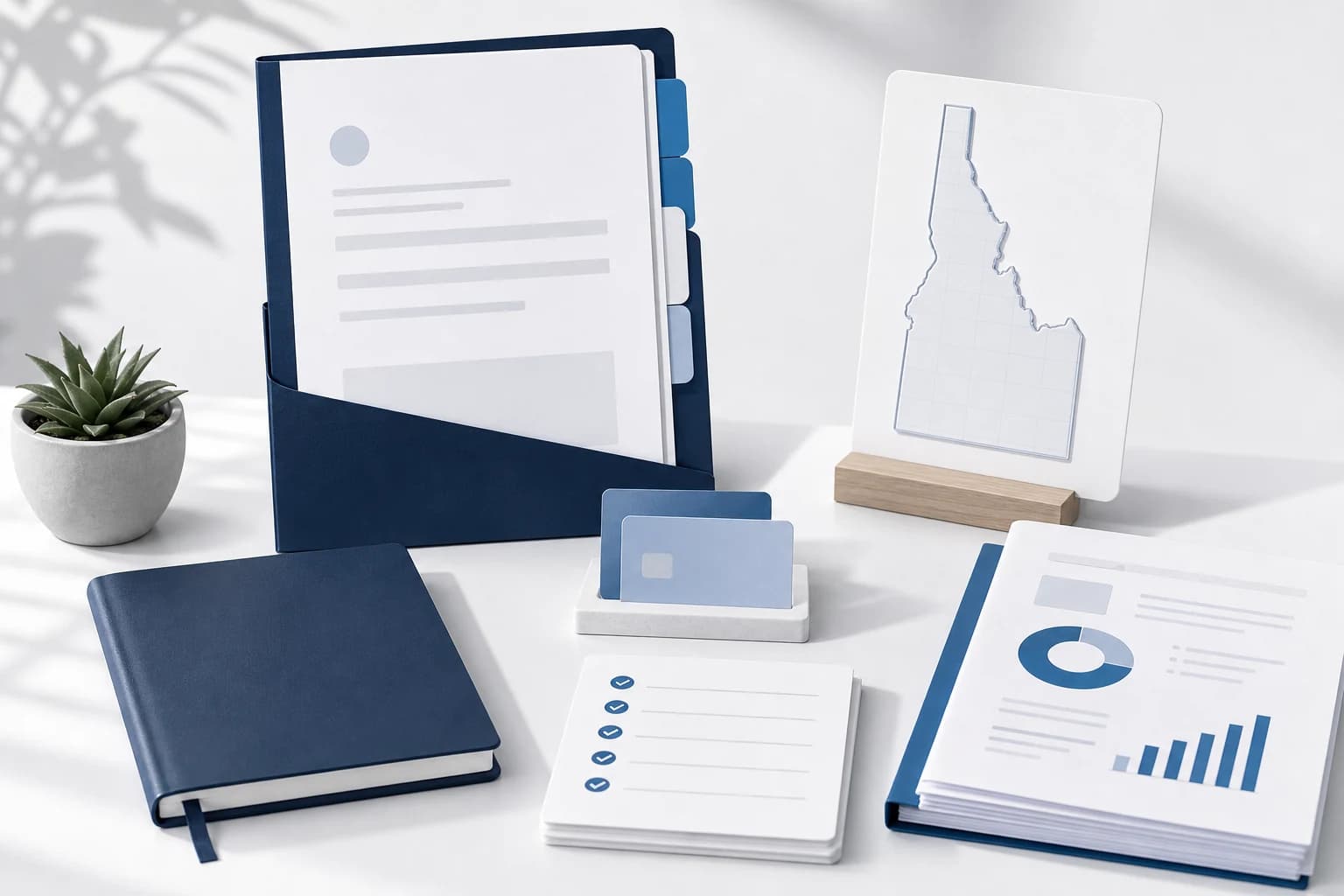
1. Register with the Idaho Secretary of State
Starting a business in Idaho is exciting, and it's also a stack of small decisions that are much easier to make in order than to untangle later. The early steps are mostly checklist work. Do them once, do them right, and you won't be cleaning up the mess next April. This is the order we walk new owners through in Idaho Falls.
Most businesses start by registering with the Idaho Secretary of State. This is where your business officially exists on paper, and a lot of the steps that follow ask for proof that you've done it.
One note before you file: questions about which structure fits (LLC, S corp, sole proprietorship, and so on) and anything legal belong with an attorney or CPA. The entity you choose affects your taxes and your liability, so it's worth a short conversation with a professional rather than a guess. Once you know what you're forming, register it and keep the confirmation somewhere you can find it.
- Decide on your entity with help from an attorney or CPA if you're unsure.
- Register the business with the Idaho Secretary of State.
- Save your confirmation and any filing numbers where you can grab them fast.
2. Get an EIN from the IRS
An EIN (Employer Identification Number) is your business's federal tax ID. You'll use it to open a bank account, run payroll, and handle most registrations. You apply for it through the IRS.
Even if you're a one-person shop, an EIN keeps your Social Security number off of forms and vendor paperwork. Get it early, because the next few steps will ask for it. If you're unsure whether your specific setup needs one, that's a good question for your CPA.
3. Open a separate business bank account
This one is simple and it saves you more headaches than almost anything else on the list. Open a business checking account, and ideally a business card too, and run every dollar of business money through them. No personal groceries on the business card, no business supplies on your personal account.
When business and personal money sit in the same account, your bookkeeper (or future you) has to sort every transaction by hand and guess at the gray ones. A separate account means your books match reality, reconciliation is fast, and your tax preparer isn't untangling your weekend at the hardware store. Bring your EIN and your Secretary of State paperwork to the bank and you'll be set up quickly.
- Open a dedicated business checking account.
- Add a business card and use it only for business.
- Stop mixing personal and business spending from day one.
4. Register for sales tax and payroll through Idaho Business Registration
Idaho runs one combined form, Idaho Business Registration, that handles several state registrations at once. If you sell taxable goods or services, you'll register for a seller's sales tax permit here. If you're hiring employees, the same registration also covers state withholding (through the Idaho State Tax Commission) and unemployment insurance (through the Idaho Department of Labor). New employers start at a 1.0% unemployment insurance rate.
Idaho's state sales tax is 6%. A few resort cities, including Driggs, Victor, Swan Valley, and Irwin, add a local-option tax on top of that, so if you sell in those places you'll collect more than 6%. There's also use tax, also 6%, on things you buy out of state or online and then use in Idaho when no sales tax was charged. That one catches a lot of new owners by surprise.
Once you have a permit, you file sales tax on a schedule. Most businesses file monthly, due the 20th of the following month. If you owe under $750 in a quarter you may file quarterly instead. Either way, file every period even when sales were zero. A missed zero-dollar return is still a missed return.
If you're hiring, get the withholding and unemployment pieces set up before that first paycheck goes out, not after. We handle payroll, withholding, and unemployment registration and remittance if you'd rather hand it off.
- Register for a sales tax permit if you sell taxable goods or services.
- If you're hiring, add state withholding and unemployment in the same registration.
- Collect 6% sales tax, plus any local-option tax in resort cities like Driggs, Victor, Swan Valley, and Irwin.
- Track use tax (6%) on out-of-state and online purchases you use in Idaho.
- File on time, monthly by the 20th or quarterly if under $750 a quarter, and file even at zero sales.
5. Choose your accounting software
Pick your bookkeeping software before transactions start piling up, not six months in when you're staring at a year of bank statements. The right tool connects to your bank and card, pulls transactions automatically, and lets you produce a profit and loss statement and balance sheet without rebuilding anything by hand.
We work primarily in QuickBooks Online, and it's what we recommend for new owners who want a clean cloud bookkeeping system. Mark Browning, our owner, is an advanced certified QuickBooks ProAdvisor (Online and Payroll) based in Idaho Falls, so QuickBooks Online users get hands-on setup and support. If you're leaning toward something else, that's fine, just choose one and commit so your records all live in one place.
6. Set up clean books from day one
Here's where a little discipline early pays off all year. Connect your business accounts to your software so transactions flow in automatically. Categorize them as they come in instead of letting them stack up. Keep digital copies of receipts and invoices. And reconcile every account against its statement each month so your books match the money that moved.
The owners who stay sane are the ones who treat bookkeeping as a monthly rhythm, not a tax-season scramble. We close your books by the 10th of each month, which means the prior month is fully categorized, reconciled, and ready before you've even thought about it.
If setting all this up sounds like one more thing on an already long list, that's exactly what we do. Start with a free books health check and we'll look at where you stand and give you a straight answer, usually within one business day. We work alongside your CPA or tax preparer so the people filing your returns get clean numbers, and you get your time back for running the business.
- Connect bank and card accounts to your software.
- Categorize transactions as they come in.
- Save digital copies of receipts and invoices.
- Reconcile every account monthly against its statement.
Common questions
Do I have to file an Idaho sales tax return if I didn't make any sales?
Yes. Once you hold a sales tax permit, you file every period on your schedule, monthly by the 20th of the following month or quarterly if you owe under $750 a quarter, even when sales were zero. A zero-dollar return still has to be filed.
Which business entity should I choose?
That's a legal and tax question, so it belongs with an attorney or CPA rather than your bookkeeper. The entity you pick affects your liability and your taxes, and a short conversation with a professional is worth it before you file with the Idaho Secretary of State. Once it's formed, we'll help you get the books and registrations set up.
What do I register for if I'm hiring my first employee?
Use Idaho Business Registration to set up state withholding through the Idaho State Tax Commission and unemployment insurance through the Idaho Department of Labor, where new employers start at a 1.0% rate. Get this done before the first paycheck. We can handle payroll, withholding, and unemployment registration and remittance if you'd rather not track it yourself.

Want this handled for you?
Get a free, no-obligation quote and a quick health check of where your books stand. We reply within one business day. No pitch, no pressure.